
Midas Merge: Matching Games
Wildlife StudiosPuzzle
4.73.63K Reviews
- Version
- 2.26.1
- Installs
- 1.00M
- Age Rating
- Everyone
Screenshots



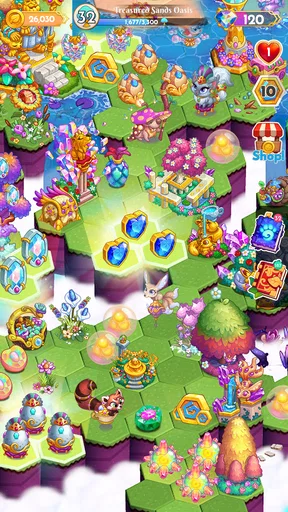


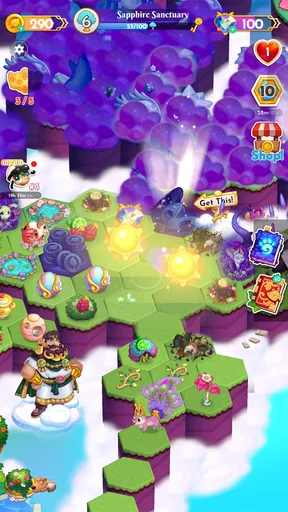

Our Review of Midas Merge: Matching Games
 Analysis by Appyee
My first impression of Midas Merge: Matching Games is that it wants to make puzzle time feel like a little retreat rather than a race. The screen is colorful without making the basic task hard to read, and the relaxed presentation suits a game built around combining objects. I found it easy to start making moves, though the calm mood shouldn’t be mistaken for a lack of decisions: choosing what to merge, and when, can matter.
This is a free puzzle game from Wildlife Studios, with a 4.7 average from around 77,000 ratings and over a million installs. It is rated Everyone, so its general tone is approachable for a broad audience. There are in-app purchases, ranging from $0.99 to $199.99 per item, which is worth keeping in mind if you prefer games with no optional spending. You can enjoy the core idea at your own pace, but the purchase range makes it sensible to use device-level spending controls if children will be playing.
A dreamlike setting built around clear objects
The visual style gives the game its identity: bright, friendly objects sit in a fantasy setting that feels more like a gentle place to tend than a tense puzzle arena. That matters because merging asks you to inspect the board repeatedly. When pieces are easy to distinguish, I can focus on planning instead of squinting at decorative details. The inviting art also gives the repeated actions a sense of place, rather than making every turn feel like a bare matching grid.
The design’s strongest point is that decoration and usability generally pull in the same direction. New players can grasp what they are looking at without a long explanation, while experienced puzzle fans can spend their attention on possible combinations. If you prefer austere boards, strict timers, or high-contrast competitive layouts, the softer look may feel too leisurely. For me, it works best when I want a puzzle that is pleasant to look at while I think.
Calm sound, flexible pacing
The soundtrack supports the relaxed mood rather than pushing me to hurry. That makes the game an easy fit for a quiet break, a short wind-down before bed, or a few minutes between ordinary tasks. I can also see why someone might turn the sound down when playing in a shared room; the visual feedback is the main thing to follow, while the music is there to color the session rather than dictate its pace.
Its rhythm suits both quick visits and longer stretches, but that flexibility has a trade-off. A calm puzzle can make time pass more easily than expected, particularly if you keep looking for one more useful merge. I’d treat it as a game to open with a rough stopping point in mind if I’m only taking a brief break. Players who want a brisk round with a clear finish may prefer a compact match-three game instead.
The Magic of Merging
At its core, Midas Merge is all about matching and merging items to create new ones. It sounds simple, right? But hold up, because there’s more to it. As you dive into the game, you’ll find a variety of levels that challenge you to think strategically about your moves. Each merge you make has the potential to create a chain reaction that could either propel you forward or set you back.
What I love about this game is its ability to be both a quick time-filler and a long-term engagement. Whether you have five minutes to spare or an hour to kill, Midas Merge accommodates your schedule. The game’s flexibility is a huge plus for those of us juggling a busy lifestyle.
Visually Appealing and Intuitive Design
One of the first things that caught my eye was the vibrant and inviting graphics. The visuals in Midas Merge are not only aesthetically pleasing but also serve a functional purpose. Each item is distinct and easy to recognize, which is crucial when you’re trying to strategize your next move. The intuitive layout ensures that even new players can jump right in without feeling overwhelmed.
The user interface is designed to be seamless and user-friendly, which makes navigation a breeze. It’s like the developers have thought of everything to make sure the experience is as smooth as possible. Plus, I’ve got to give a shoutout to the soundtrack—it’s both calming and engaging, setting the perfect tone for endless merging fun.
Strategize for Success
Now, let’s talk strategy. The game’s mechanics require you to think a few steps ahead, much like a game of chess. You have to consider which pieces to merge for maximum impact, and sometimes it’s not the most obvious move that gets you the best results. This element of strategy adds depth to the game and keeps it from becoming monotonous.
There are various power-ups and bonuses that you can unlock as you progress. These little helpers can be game-changers, especially when you’re stuck on a particularly tricky level. It’s all about knowing when to use them and when to hold back, adding another layer to the gameplay.
Community and Updates
Midas Merge has a thriving community of players who are always eager to share tips and tricks. The game’s developers are also very active, frequently rolling out updates that include new levels, features, and bug fixes. It’s nice to know that the game is continuously evolving and that feedback is being taken into account.
Engaging with the community can provide you with insights that aren’t immediately obvious and can significantly enhance your gameplay experience. Plus, it’s always fun to connect with fellow players and share in the joys and frustrations of the game.
Should You Download It?
In my opinion, Midas Merge: Matching Games is definitely worth a try. It’s one of those games that’s easy to pick up but hard to put down, which is a testament to its engaging design and addictive gameplay. Whether you’re a casual gamer or someone who loves a bit of a challenge, there’s something in it for everyone.
So, if you’re ready to embark on a magical journey of matching and merging, you can download Midas Merge from your app store of choice. Trust me, once you start, you’ll be hooked!
How it fits into an ordinary day
A practical way to approach this game is to treat it as a small, repeatable pause rather than a task to clear in one sitting. For example, I might open it while waiting for a kettle to boil, make a few deliberate merges, then leave when the break is over. On a longer commute or a quiet evening, I’d be more inclined to explore the board and consider combinations for longer. That distinction helps the game’s gentle pace feel like a benefit instead of an invitation to keep tapping without noticing the time.
For a newer player, my useful habit would be to scan the board before making the first move, then ask whether a merge opens useful space or simply changes an item. That small pause is more valuable than trying to act quickly. When several possible combinations are available, I’d favor moves that preserve options until I understand what the next goal requires. It is a low-pressure way to learn the game’s logic without assuming every move needs to be perfect.
What kind of puzzle player will enjoy it
The game is a good fit if you like watching a board develop through combinations and enjoy a little planning between relaxed sessions. It may also suit someone who finds conventional match-three rounds too focused on quick pattern spotting: merging has a more incremental feel, with decisions about what to combine and what to leave for later. The appeal is less about racing an opponent and more about managing a small puzzle space at a comfortable rhythm.
On the other hand, I wouldn’t choose it as my first pick for a sharp, time-limited challenge or a puzzle with a clean, self-contained round every few minutes. Players who want strict competitive scoring, a hard timer, or a purely logic-based problem may get more satisfaction from a different puzzle format. The merging loop is the main attraction here, so anyone who dislikes sorting and combining objects is unlikely to be won over by the setting alone.
Small decisions that make a difference
One trade-off worth noticing is that a merge can feel rewarding while still being strategically premature. I try not to combine every available group automatically; first I consider whether a later combination might be more useful or whether the move will make the board easier to manage. This is the sort of quiet judgment that gives the game more texture than its simple premise suggests. It also makes a session feel less repetitive, because the same kind of object can call for different choices depending on what surrounds it.
Power-ups and bonuses can help when progress slows, but I’d avoid treating them as the default answer to every awkward moment. Saving a helper until I have a clearer sense of the obstacle makes its use feel intentional. If I’m stuck, I’d first pause and look for a different sequence of merges; using assistance too quickly can skip the satisfying part of working out a route. That approach is especially useful for players who want the puzzle decisions, not just the visible progress.
Another sensible habit is to stop after a meaningful bit of progress rather than chasing a perfect board. The game’s easygoing flow is inviting, but puzzle boards can encourage “one more move” thinking. Leaving with a next step in mind can make it easier to return later without needing to remember every possibility. I find that more practical than trying to finish a long session in one go, particularly when I’m playing in short gaps during the day.
How it compares with familiar alternatives
Compared with match-three games, this experience puts more emphasis on combining and developing objects than on rapidly finding adjacent patterns. That gives it a more contemplative feel, though it can also mean that players looking for immediate, compact rounds may find the pace less crisp. Compared with minimalist merge puzzles, its fantasy presentation gives the activity more warmth and visual character, while the plentiful decoration may not appeal to people who want a bare board and nothing else.
That difference is useful when deciding what to install. If I want something colorful to dip into without a competitive edge, this is the kind of puzzle I’d reach for. If I want a quick round with a clear endpoint, a conventional match-three title may be the better choice; if I want pure deduction, a logic puzzle would suit me more. The strength here is the combination of a soft atmosphere and planning, not dominance in every puzzle style.
Practical details before settling in
The game is currently at version 2.3.1 and supports Android 6.0 or later. Those details make it easier to judge whether it is a plausible fit for an older Android device, though I’d still check available storage and device performance before installing any game. It is free to start, but optional purchases range widely, so I’d decide in advance whether I’m comfortable with in-app spending. If a child will use the device, purchase restrictions can prevent an accidental tap from becoming an unwanted expense.
For a casual player, the main question is whether the merge loop stays interesting after the first few sessions. I’d give it a fair try if the initial rhythm appeals to you, but I wouldn’t force it if you find yourself making moves mechanically. The strategic pleasure comes from noticing useful sequences and choosing when to wait, so the game works best when you enjoy that kind of small decision-making. Its Everyone rating makes the overall presentation broadly accessible, while the purchase options are the practical detail families should keep in view.
A measured recommendation
I’d recommend giving this one a look if you want a colorful puzzle that can fit around everyday routines and don’t mind a gradual, merge-focused pace. Its art, sound, and mechanics reinforce the same mellow mood, and the board decisions provide enough thought to keep the activity from being purely decorative. Wildlife Studios has a recognizable audience for the game, reflected in its 4.7 average from roughly 77,000 ratings, but that popularity doesn’t mean its style will suit every puzzle fan.
The best reason to try it is the balance between an inviting world and choices that reward a little patience. The main reason to pass is equally clear: if you need fast rounds, firm competitive pressure, or no in-app purchase prompts in your games, another puzzle may fit better. For me, Midas Merge is most enjoyable as a gentle, occasional ritual—something to open for a considered handful of moves, then put down when the break is over.
Verdict
Strengths of Midas Merge: Matching Games
- Engaging puzzle mechanics
- Colorful and vibrant graphics
- Easy to learn, hard to master
- Frequent updates enhance gameplay
- No intrusive ads
Limitations of Midas Merge: Matching Games
- Occasional lag on older devices
- In-app purchases can be costly
- Limited offline play options
- Repetitive soundtrack
- Some levels feel unbalanced
Other Releases by Wildlife Studios
View All
Sniper 3D:Gun Shooting Games
Action4.6

Block Craft 3D:Building Game
Arcade4.5

Flight Pilot: 3D Simulator
Role Playing4.1

Bike Race:Motorcycle Games
Racing4.4
Similar Picks in This Category
View All
Block Blast!
HungryStudio4.8

Braindom: Brain Games Test
Lahana Game Studio4.6

AMAZE!
CrazyLabs LTD4.6

Sudoku - Classic Sudoku Puzzle
Oakever Games4.7

Art Puzzle - Puzzle Games
Easybrain4.8

Amaze GO!
Oakever Games4.9
Frequently Asked Questions
What is Midas Merge: Matching Games?
Midas Merge: Matching Games is an engaging puzzle game available for both Android and iOS devices. The game combines elements of traditional match-three puzzles with strategic merging mechanics, allowing players to solve intricate puzzles while unlocking new levels and challenges. It's designed to be both fun and mentally stimulating.
Is Midas Merge free to play?
Yes, Midas Merge: Matching Games is free to download and play. However, like many free-to-play games, it offers in-app purchases. These purchases can enhance your gameplay experience by providing additional features, power-ups, or removing ads, but they are entirely optional.
What are the main features of Midas Merge?
Midas Merge offers a variety of features, including hundreds of challenging levels, daily rewards, and special events. The game also boasts a vibrant design and smooth gameplay mechanics. Players can enjoy a unique combination of matching and merging elements, which adds depth and strategy to the traditional puzzle format.
Does Midas Merge require an internet connection?
Midas Merge can be played offline, allowing users to enjoy the game without an internet connection. However, to access certain features, such as leaderboards or special events, an internet connection might be necessary. Playing online also ensures that your progress is saved and synchronized with online servers.
Can I play Midas Merge on multiple devices?
Yes, you can play Midas Merge on multiple devices. To do this, you need to connect the game to a social media account or a gaming platform account. This will sync your progress across devices, allowing you to pick up where you left off, whether you're on your phone or tablet.
Play our best games!


